Category: Sludge & Varnish
Jim Fitch authored articles & papers
-
Demystifying Sludge and Varnish
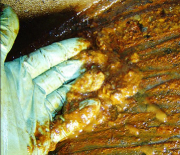
The approach of detecting and analyzing sludge and varnish problems in machinery is not the same as used oil analysis. In many instances this is because the evidence is not always in the oil. Read More
-
The Effects of Temperature on Lubricants (Why oil is like an egg)

Hot oil has typically received the most press, even in this publication. After all, oil is not like fine wines that get better over time. In fact, even the very best wine will stress-out when exposed to too much heat. Read More
-
What is Your Oil’s Impurity-holding Capacity (IHC)?

There has been much said in recent years about the increased propensity of some modern oil formulations to produce sludge and varnish. Ironically, many of the oils accused of contributing to varnish are the same oils endowed with exceptionally high oxidation stability due to advanced refining technology and formulation science. Read More
-
Review of Degradation Mechanisms Leading to Sludge and Varnish in Modern Turbine Oil Formulations
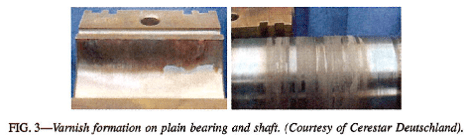
In recent years, there has been an unusually large number of reported cases associated with varnish and sludge formation in turbine-generator and compressor applications using Group II turbine oil formulations. Read More
-
Sludge and Varnish in Turbine Systems

The products of lubricant degradation are called sludge and varnish. These products start in the dissolved form and accumulate until the lubricant reaches its capacity, referred to as the saturating point, forcing any excess to convert into insoluble degradation products. Read More
-
Sludge and Varnish: Two Puzzling Contaminants
Most oil-related problems in machinery lead to wear or corrosion. However, there is one very serious problem – the presence of sludge and varnish – that may cause neither. Instead, these substances plug flow passages and cause valve sticking. Read More