By Jim Fitch
Machinery Lubrication Magazine
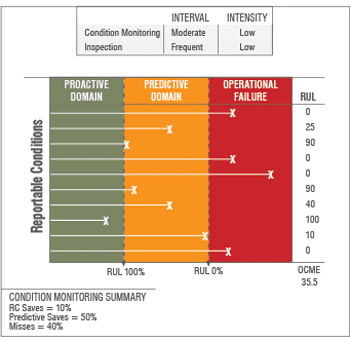
Condition monitoring should never be limited to a single technology or method. Instead, it should combine and integrate an optimum selection of purposeful tools and tasks. Condition monitoring can be largely technology based but can also be observation or inspection based.
Most machines share condition monitoring and inspection needs with many other types of equipment. This is because they have components and operating conditions in common, i.e., motors, bearings, seals, lubricants, couplings, etc. At the same time, their operating conditions and applications may demand unique inspection requirements. These influence failure modes and machine criticality.
As discussed in previous columns, inspection should be viewed with the same serious intent as other condition monitoring practices. In my opinion, a world-class inspection program should produce more “saves” than all other condition monitoring activities combined. It’s not an alternative to technology-based condition monitoring but rather a strategic and powerful companion.
The technologies of infrared thermography, analytical ferrography, vibration analysis, motor current and acoustic emission are generally used to detect active faults and abnormal wear. Conversely, a well-conceived inspection program should largely focus on root causes and incipient (very early stage) failure conditions. Detection of advanced wear and impending failure is secondary.