By Jim Fitch and Sabrin Gebarin
Proceedings of the Oxidation and Testing of Turbine Oils Symposium
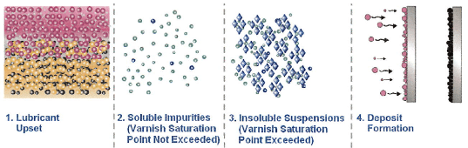
A wide range of fluid degradation and contamination-related issues can affect turbine lube oil systems. One serious and growing concern is the presence of sludge and varnish. This condition can occur in even the most well-maintained machines. Surprisingly, it can also happen when oils are not particularly old or contaminated. And it can occur with even the most thermally robust synthetic lubricants and hydraulic fluids.
In turbine systems, there are few failure conditions that can disrupt operation as quickly and completely as a varnished and seized-up control valve operation. This can be the cause of a tripped turbine forced outage or other production losses. So too, sludge in many circulating lube oil systems can gum up flow controls, strainers and critical oil ways. In recent years, there has been a large number of reported cases associated with varnish and sludge formation in turbine-generator applications. Explanations for these problems have varied but typically include Group II mineral oil solubility issues, additive instability, bulk oil oxidation, adiabatic compressive heating and electrostatic discharge, among others. This paper will review precursor conditions that lead to sludge formation, some of the common lubricant degradation methods and the role of oil analysis in recognizing the potential risk well ahead of failure.