By Jim Fitch
Booklet, Noria Publishing
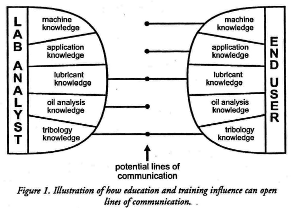
Turning an oil analysis program into a feisty profit center is well within reach of today’s modern maintenance organizations. In fact, it is commonly achieved. The strategy, perhaps, depends less on what the data is trying to communicate than the confidence the user assigns to the data. In fact, successful users of oil analysis have learned that achieving high confidence in oil analysis data is a team effort; the goals and responsibilities are shared equally between both the user and the laboratory. Such programs, when well-applied, result in a satisfying win-win business relationship.
From the user’s perspective, there are many strategic elements to developing a positive working relationship with commercial oil analysis laboratories. When the end user has a basic understanding of the business needs of the laboratory and structures a program consistent with satisfying those needs, the underpinnings of a successful relationship exist. Likewise, the laboratory needs to provide the essential services needed to insure that the oil analysis program is sufficiently information-intensive and builds core value from the point of view of the user and his goals. These goals vary in emphasis from user to user but typically relate to subjects such as reduced lubricant consumption, root cause condition control, and incipient fault detection.
Because a high percentage of today’s oil analysis users are setting up primary or auxiliary labs onsite, the lab-user relationship is changing and needs to be redefined. In such cases the service provider is internal and, being a stakeholder in the organization, would share many of the goals of reliability and cost reduction. However, unlike the commercial lab the onsite er corporate lab may not ~ motivated to achieve high sample volume, peak productivity, and near term profits. Consequently, the relationship must mold to the business environment.