By Jim Fitch
Machinery Lubrication Magazines
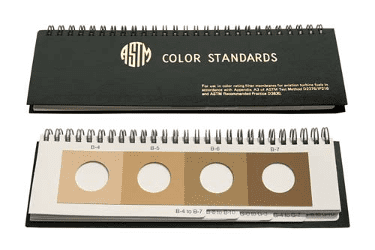
The practice of transferring suspended particles to the surface of a membrane for analysis has been around for decades. It is perhaps the earliest method for inspecting solid contaminants and wear debris in a used sample of oil. It is of no surprise that these methods have enduring use today. In fact, some are the basis of recently adopted standardized methods by ASTM and ISO.
While membrane-based procedures for preparing particles for analysis can be time consuming and messy (usually involving the use of glassware and solvents), the benefits can be substantial compared to alternative methods. The main advantage is the ability to both quantitatively and qualitatively describe particle contamination, depending on the method used. As in the case of microscopic particle counting, you see what you’re counting and can confirm visually what appears to be a particle. You can also characterize particle type (e.g., dirt, wear debris, rust, fibers, etc.).
Because of the importance of these techniques to a modern and well-engineered oil analysis program, it seemed like a good time to review the options. There are actually eight different methods that are worth mentioning. Most have previously been covered in Noria publications, but a couple have not. We’ve used all but one of these methods in our failure investigation work here at Noria. A narrative of the methods is provided below and a summary that compares and contrasts them is shown in Table 1.