By Jim Fitch
Machinery Lubrication Magazine
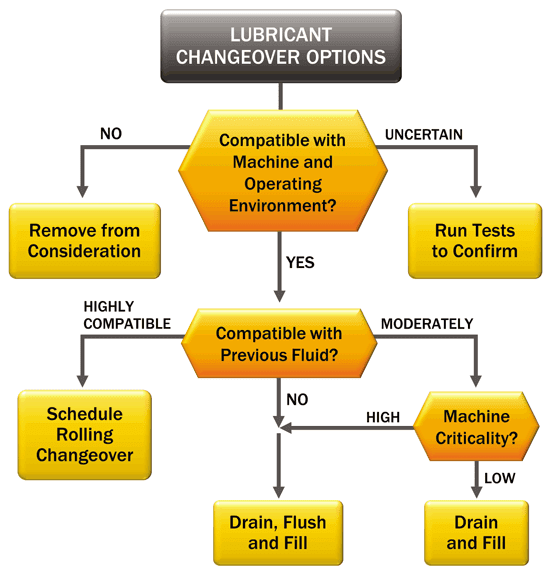
After a short bedding-in time at an elevated temperature, which allows the base oil and additives to chemically and physically interact, the mixtures are ready to be inspected and tested further. If floc, sediment, clouding or discoloration develops from the mixtures, the lubricants are confirmed to be incompatible (tier-one test) without further analysis. If this doesn’t occur, then another tier of testing should be seriously considered.
Machine criticality plays a vital role in this decision, along with other factors (see sidebar on page 4). A lubricant specification can be used as the baseline for the tier-two tests, or the performance listed on the new lubricant from its product data sheet. Performance tests can include filterability, air-handling ability, water-handling ability, film strength, oxidation stability, corrosion suppression, etc.
The selection of these tier-two tests is largely driven by the critical performance needs in the target machine application. Again, standardized test methods can be employed, especially relating to elastomers and surface treatments. Risk relating to chemical exposures might include certain gases (refrigerants, ammonia, hydrogen sulfide, etc.), fuel, coolants, process chemicals, etc. Custom testing may also need to be performed to assess their compatibility.