By Jim Fitch
Machinery Lubrication Magazine
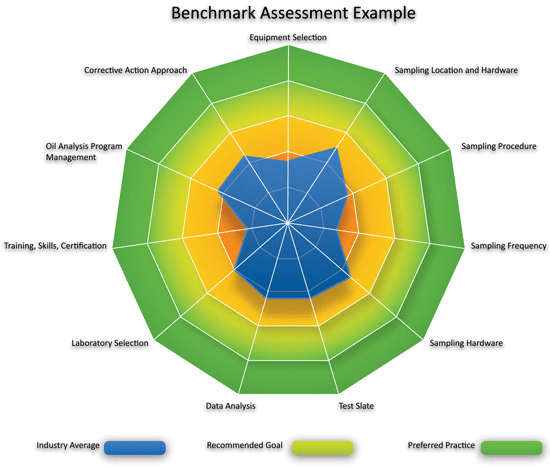
These days an increasing number of companies are trying to achieve a state of lubrication called “lubrication excellence.” Others might call this “world-class” lubrication. Most understand the reliability benefit gained when excellence in lubrication is attained, yet even those who are professionals in reliability and maintenance too often have vague ideas of what defines lubrication excellence.
We all know that machines used in plant production processes are designed and built to engineering specifications intended to achieve a desired level of performance, efficiency and productivity. Using this same concept, it is reasonable to write an engineering specification for machine reliability and lubrication excellence. In the specification would be an itemized list of critical attributes needed to achieve the desired state of reliability. It should be noted that only part of the specification relates to the design and modification of the machine.
In the past, these critical attributes have sometimes been called “best practice” or the “rights of lubrication,” but what exactly defines best practice and these so-called rights? A true engineering specification must be precisely defined and purposeful. It needs to not only permit the desired level of reliability to be achieved but also be within reach of most reliability and lubrication teams.
I would like to introduce a new term called the Optimum Reference State related to the integrated and collective use of these critical attributes. Let me define this important term:
“The Optimum Reference State (ORS) is the prescribed state of machine configuration, operating conditions and maintenance activities required to achieve and sustain specific reliability objectives.”
Note the definition for the ORS does not state a requirement to “maximize” reliability. This is because a point can be reached where the incremental cost of reliability exceeds the incremental benefit (point of diminishing return). Such overspending on lubrication is seen, for example, when synthetics are used in marginal applications or when lubricants are changed too frequently. Like many things in engineering and reliability, there is a “precision” component to good decisions.