By Jim Fitch
Book chapter. Practical Lubrication for Industrial Facilities. Compiled and edited by Heinz P. Bloch
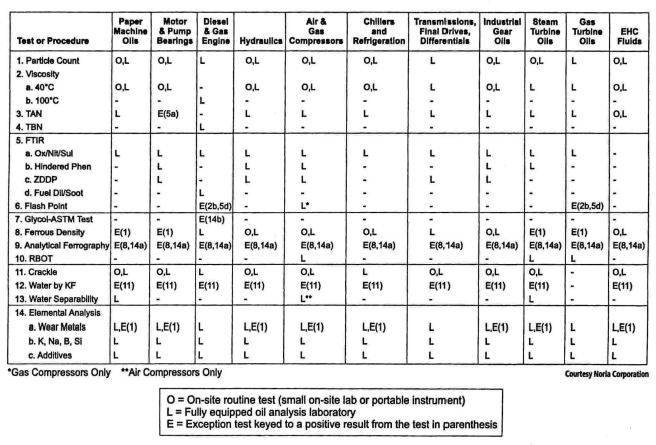
Every industrial organization has experienced the consequences of shoddy maintenance: contract penalties, junked parts, injuries, catastrophic damage, ballooning costs, missed shipping dates, irate customers, and sickly quarterly financial reports. Gone are the days when a machine had a predictable service life, after which it was replaced, continuing the cycle. Today, machinery and equipment can be maintained to achieve useful operating lives many times those attainable just a few years ago. For oil lubricated machinery there are many opportunities in what is commonly referred to as proactive maintenance.
By carefully monitoring and controlling the conditions of the oil (nurturing), many of the root causes of failure are systematically eliminated. Case studies of highly successful organizations show that oil analysis plays an important, central role in this nurturing activity. But first, in order for oil analysis to succeed the user organization must define what the goals will be.
Some people see oil analysis as a tool to help them time oil changes. Others view it in terms of its fault detection ability. Still, others apply it to a strategy relating to contamination control and filter performance monitoring. In fact, when a program is well designed and implemented, oil analysis can do all of these things and more. The key is defining what the goals will be and designing a program that will effectively meet them. One might refer to it as a ready-aim-fire strategy. The ready has to do with education on the subject of oil analysis and the development of the program goals. The aim uses the knowledge from the education to design a program that effectively meets the goals. The fire executes the plan and fine-tunes through continuous improvement.