By Jim Fitch
Machinery Lubrication Magazine
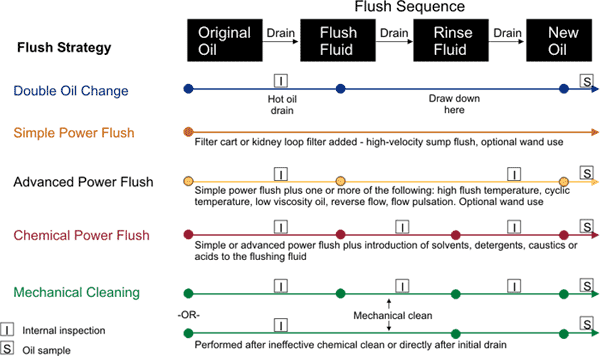
This is Part Three of a four-part series on flushing. Part One (May-June issue of Machinery Lubrication) addressed the topic of when to perform a flush and the possible consequences of delaying the procedure. Part Two (July-August ML) covered the maze of flushing tactics and discussed the similarities and differences between flushing and oil reconditioning.
Part Three establishes a rationale to select the best tactics for the specific machine and conditions requiring flushing. The final part of the series will assemble them into a program of steps needed to achieve a complete and successful flush. If you haven’t already read the first two parts, I suggest you review them before proceeding with the strategies outlined below.
It stands to reason that selecting the wrong flushing tactic and strategy can be not only costly and time-consuming but potentially ineffective. Carelessly opening a machine and introducing foreign fluids may also present risk to the machine’s future reliability – more harm can be done than good.