By Jim Fitch
Practicing Oil Analysis Magazine

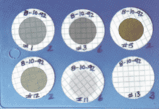
The practice of transferring suspended particles to the surface of a membrane for analysis has been around for decades. It is perhaps the earliest method for inspecting solid contaminants and wear debris in a used sample of oil. It is of no surprise that these methods have enduring use today. In fact, some are the basis of recently adopted standardized methods by ASTM and ISO.
While membrane-based procedures for preparing particles for analysis can be time consuming and messy (usually involving the use of glassware and solvents), the benefits can be substantial compared to alternative methods. The main advantage is the ability to both quantitatively and qualitatively describe particle contamination, depending on the method used. As in the case of microscopic particle counting, you see what you’re counting and can confirm visually what appears to be a particle. You can also characterize particle type (e.g., dirt, wear debris, rust, fibers, etc.).