-
Linking Enhanced Reliability to the State of Lubrication
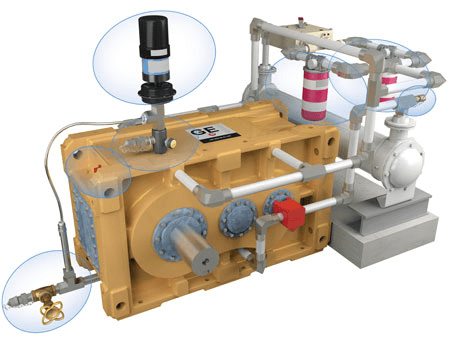
The lubricant Optimum Reference State (ORS) is a critical concept in the journey to world-class lubrication and enhanced machine reliability. In short, it is the prescribed state of machine configuration, operating conditions and maintenance activities required to achieve and sustain specific reliability objectives. Read More
-
The Four States of Water in Oil
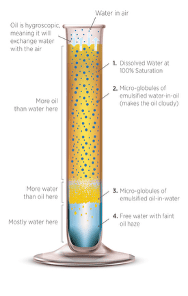
In the last 30 years or so, most of the literature, including Noria’s publications, refer to water as having three states. Free water has been redefined as being water that, by force of gravity, will phase out of the oil. This means it will separate below (most common) or above the oil phase depending on… Read More
-
Best Practices in Maximizing Fault Detection in Rotating Equipment Using Wear Debris Analysis

The analysis of power train lubricants for the purpose of detecting faults and abnormal wear patterns is a well developed practiced in mobile equipment applications. Read More
-
How and Why Machines Wear Out
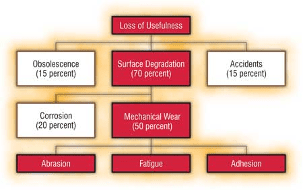
According to Massachusetts Institute of Technology professor emeritus and luminary tribologist Ernest Rabinowicz, there are three things that cause machines to lose their usefulness: obsolescence, accidents and surface degradation. Without question, obsolescence is fundamental to the evolution of engineering and technology. Read More
-
How Water Causes Bearing Failure
By Jim FitchMachinery Lubrication Magazine It takes only a small amount of water (less than 500 ppm) to substantially shorten the service life of rolling element bearings. There is a vast amount of research that supports this. Being a career-long crusader of clean and dry oil, I will certainly not argue the contrary. In fact,… Read More
-
Maximizing Fault Detection in Rotating Equipment Using Wear Debris Analysis
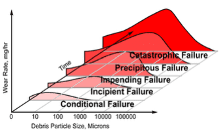
The analysis of power train lubricants for the purpose of detecting faults and abnormal wear patterns is a well developed practice in mobile equipment applications. However, these same techniques don’t always transfer successfully into stationary equipment applications for many users. Read More
-
The Benefits of Using Wear Debris Analysis in Industrial Machinery

The analysis of powertrain lubricants for the purpose of detecting faults and abnormal wear patterns is a useful practice in mobile equipment applications. Unfortunately for many users, these techniques don’t always transfer successfully into stationary equipment applications. In recent years, new approaches and techniques have been advanced to improve the detection of incipient and developing… Read More
-
Aren’t Machines Supposed to Wear Out?
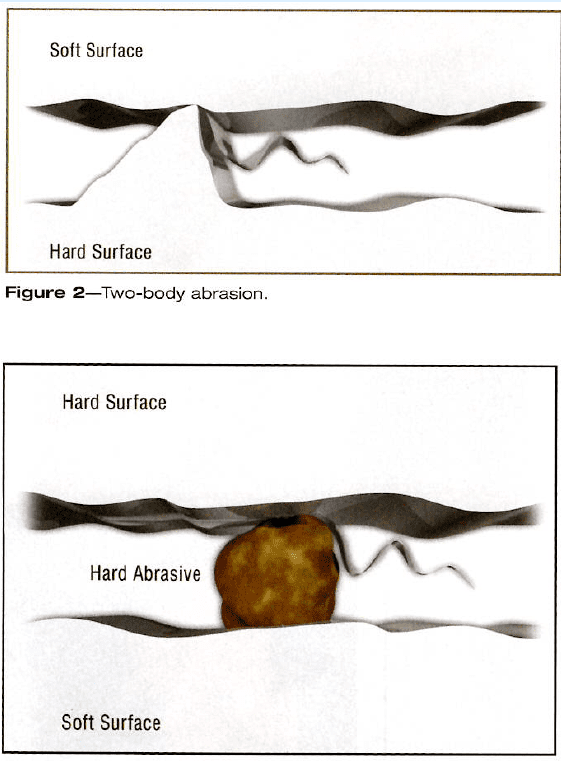
You’ve heard the expression. There are only two things in life that are certain: death and taxes. Some have suggested that the same applies to machinery. Read More