-
Demystifying Sludge and Varnish
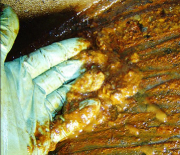
The approach of detecting and analyzing sludge and varnish problems in machinery is not the same as used oil analysis. In many instances this is because the evidence is not always in the oil. Read More
-
Moisture – The Second Most Destructive Lubricant Contaminant
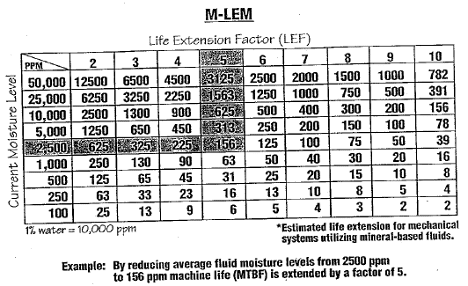
With few exceptions, the chemical and physical stability of lubricants are threatened by even the slightest amount of suspended water. Read More
-
Moisture… the Second Most Destructive Lubricant Contaminant, and its Effects on Bearing Life

Moisture is generally referred to as a chemical contaminant when suspended in lubricating oils. Its destructive effects in bearings can reach or exceed that of particle contamination, depending on conditions. Read More
-
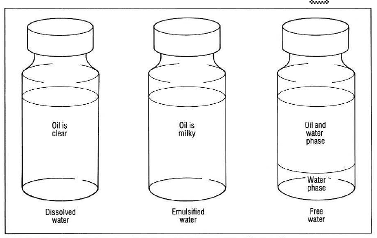
The Four States of Water in Oil
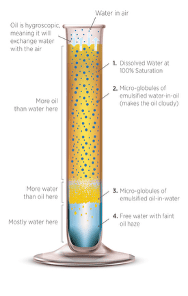
In the last 30 years or so, most of the literature, including Noria’s publications, refer to water as having three states. Free water has been redefined as being water that, by force of gravity, will phase out of the oil. This means it will separate below (most common) or above the oil phase depending on… Read More
-
How Water Causes Bearing Failure
By Jim FitchMachinery Lubrication Magazine It takes only a small amount of water (less than 500 ppm) to substantially shorten the service life of rolling element bearings. There is a vast amount of research that supports this. Being a career-long crusader of clean and dry oil, I will certainly not argue the contrary. In fact,… Read More
-
Review of Degradation Mechanisms Leading to Sludge and Varnish in Modern Turbine Oil Formulations
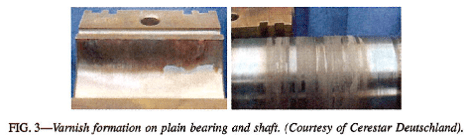
In recent years, there has been an unusually large number of reported cases associated with varnish and sludge formation in turbine-generator and compressor applications using Group II turbine oil formulations. Read More
-
Sludge and Varnish: Two Puzzling Contaminants
Most oil-related problems in machinery lead to wear or corrosion. However, there is one very serious problem – the presence of sludge and varnish – that may cause neither. Instead, these substances plug flow passages and cause valve sticking. Read More
-
The Hazards of Water Contamination in Oil

Most of us are well aware of the enormous damage water can exact on a machine and its lubricants. However, the magnitude of this potential destruction seems to depend directly on five enabling factors. These factors are listed below and are further diagramed in Figure 1. Read More
-
The Meaning of Low Viscosity
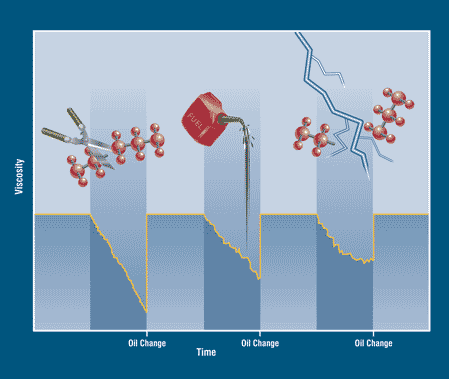
Viscosity can go up, down or remain unchanged. The list of root causes that can alter a viscosity reading is quite extensive; hence the reason why viscosity has become such an information-rich measure of used oil condition. After all, when viscosity has not changed, you can rightly conclude that the many known viscosity-altering factors are… Read More
-
Filtering water from hydraulic oil
Water in a hydraulic system constitutes a serious form of oil contamination. However, water contamination is rarely recognized as such, hardly understood, and, until recently, considered difficult to combat. Read More
-
Filters can Remove Water from Hydraulic Fluid
Here is the latest component for hydraulic system filtration and contamination control Water is a very serious contaminant in oil hydraulic systems. Yet, water contamination is rarely identified, poorly understood, and, until recently, considered very difficult to remove. Read More
-
Moisture… the Second Most Destructive Lubricant Contaminant, and its Effects on Bearing Life
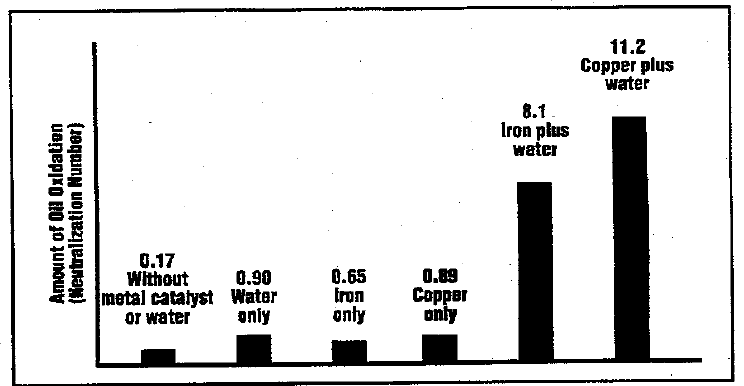
Water, once in an oil, is in constant search of a stable existence. _Unlike oil, the water molecule is polar, which greatly limits its ability to dissolve; and many additives have polar extremities which can markedly increase water solubility. Read More
-
Moisture… the Second Most Destructive Lubricant Contaminant, and its Effects on Bearing Life
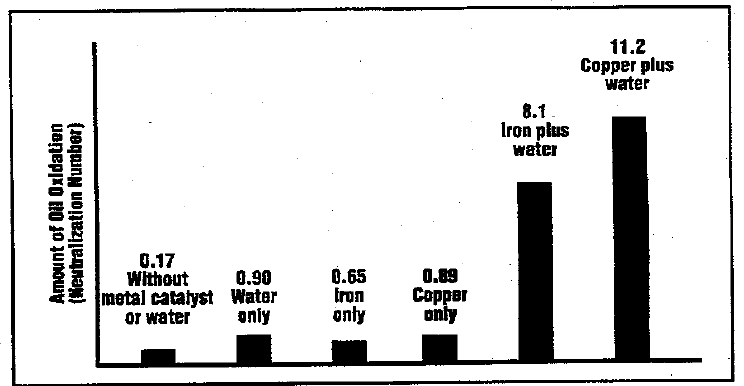
Water, once in an oil, is in constant search of a stable existence. _Unlike oil, the water molecule is polar, which greatly limits its ability to dissolve; and many additives have polar extremities which can markedly increase water solubility. Read More
-
Filters can remove the water from hydraulic oil
Water in a hydraulic system constitutes a very serious form of oil contamination. Technically, water contamination is rarely recognized as such, poorly understood, and, until recently, considered difficult to combat. Read More
-
Filters kunnen het water uit hydraulische olie verwijderen (Filters can remove the water from hydraulic oil)
Water in a hydraulic system constitutes a very serious contaminant of the oil. Nevertheless, water contamination itself is rarely recognized, poorly understood, and until recently, considered difficult to combat. Read More