Category: Lubricant Selection
Jim Fitch authored articles & papers
-
Avoiding the Pitfalls of Viscosity-starved Machines

Industry rides on a film of oil. The oil’s viscosity bears the load and defines the extent of clearance achieved between working surfaces. Sometimes that clearance is thick and bountiful, and other times it is deflated or extinct. Without viscosity, most machines would rapidly self-destruct with mechanical friction and wear. Read More
-
Food-grade Lubricants and the Food Processing Industry

The food processing industry presents unique challenges to lubricant formulation engineers, lubricant marketers, plant lubrication engineers, equipment designers, and builders. While it is never desirable for lubricants to be allowed to contaminate raw materials, work-in-progress. or finished product, the consequences of a lubricant contaminated product is rarely more acute than in the food processing industry.… Read More
-
Lubricant Consolidation: Steps and Benefits
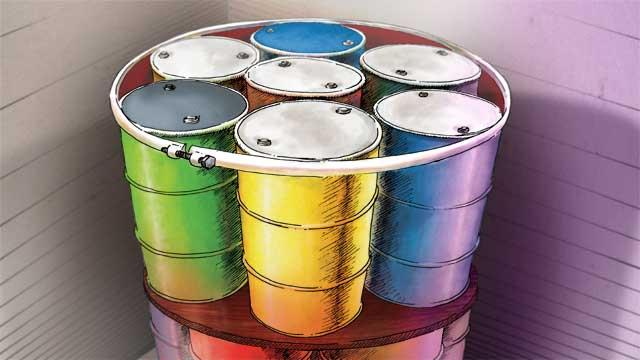
In the interest of reducing purchasing costs and streamlining storage and handling, many organizations have substantially slashed the number of lubricant SKUs (stock keeping units) they use. Read More
-
Don’t Ignore Viscosity Index When Selecting a Lubricant
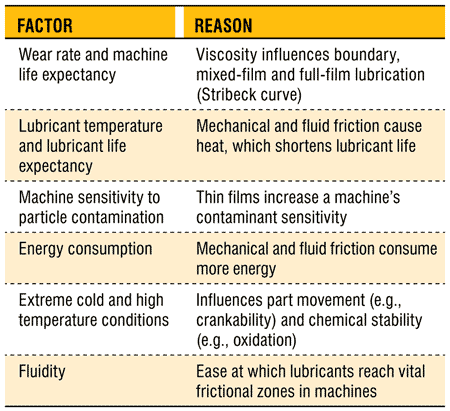
Too often the viscosity index (VI) is disregarded as a lubricant selection parameter. One reason is simply because it is poorly understood. Read More
-
Measure by Measure [oil analysis in machine condition monitoring]
By some estimates, condition monitoring has been around for more than a century, but it is only within the last 5-10 years (and particularly the last 2 or 3) that interest has been at fever pitch. Read More