By Jim Fitch
Machinery Lubrication Magazine
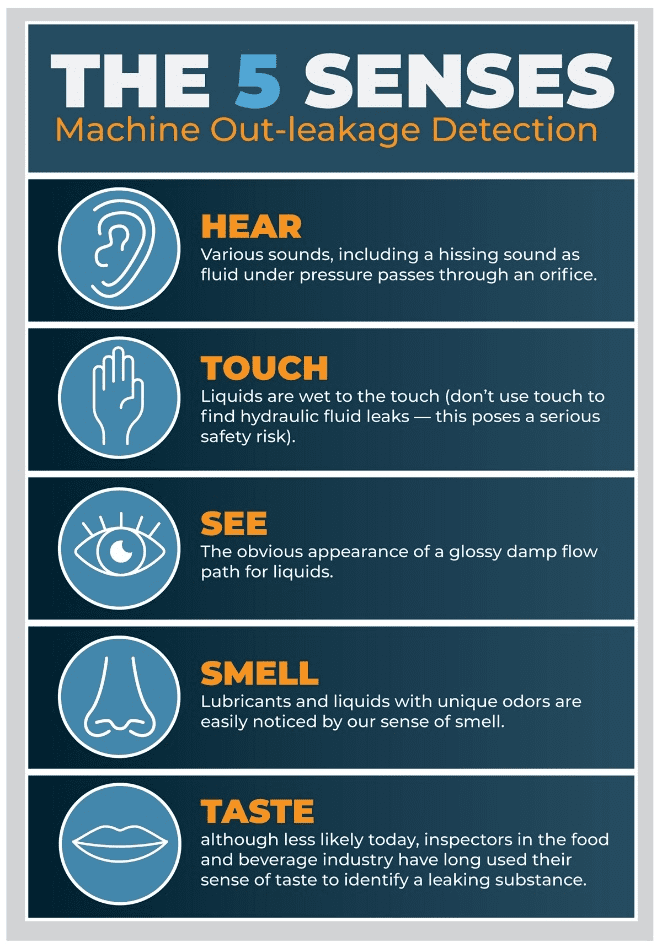
This is the most common form of leakage. It is also known as external leakage. Out-leakage relates to a failure of containment. Typically, liquids or gases follow the path of least resistance, going from high pressure to lower pressure. A crack, clearance, orifice or unsealed space becomes the leakage path through which the fluid, gas or even solids (aggregate) exit to the surrounding environment.
The machines most prone to oil leakage are compressors, process pumps, engines and hydraulic systems. Think of an automobile engine, the product of billions of dollars of engineering advancements spanning more than a century. As sophisticated as it might be, we still see the ubiquitous presence of oil and coolant leakage on the pavement of garages and parking lots. We, therefore, must depend heavily on early detection and prompt corrective action to keep leakage under control.
For certain machines and production processes, out-leakage can result in the contamination of the product being produced (food, beverage, paper, etc.). Hydraulic systems, due to their high pressures, are the most prone to leakage, which can occur in multiple locations but is usually seen at fittings, hoses, dynamic seals and static seals. Seals used to control out-leakage are called retention seals. Many seals attempt to serve both functions of retention and exclusion.