By Jim Fitch
Machinery Lubrication Magazine
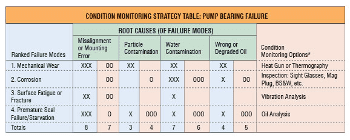
No warning or short-warning failures are the worst kind. Think of a tire. It can wear out slowly over thousands of driving miles or rupture suddenly, at full highway speed, from a random piece of road debris. You can monitor tread loss over time and conveniently schedule a tire change. Conversely, who could predict the sudden appearance of a sharp piece of iron?
Fault bubbles are sudden-death conditions in waiting. They haven’t ruptured, but they are about to. Similar to a tire, fault bubbles can burst instantly. Unlike the tire, most fault bubbles in industrial machinery can be revealed by condition monitoring, which includes the careful examination by a skilled inspector. Once detected, the root cause can be arrested or at least mitigated.
In past columns, I’ve mentioned the P-F interval. As a review, “P” is the point at which a failure (in progress) is first detected, while “F” is the end point of functional inoperability. Although the P-F interval is a theoretical concept that has useful application, it is rarely applied in real-world machines. This is because the real world comes with many variable events. These events distort the predictability of the P-F interval.