-
The Difference Between Good Lubrication and Good Lubricants

I have learned that excellence in lubrication is just as difficult to realize as it is rare to find. The reasons for this are many. One simple explanation is the field of lubrication is a specialty that takes education and years of experience to master – like most professions. Read More
-
Why Onsite Particle Counting Makes Sense

With the widespread use of plant-level particle counters, maintenance organizations are becoming more sophisticated and skilled in the management and control of oil cleanliness. This has led to the discovery of a host of new tactics and practices that involve combining the particle counter with other important onsite oil analysis tools and methods. Read More
-
A New Approach to Maintaining Industrial Equipment
Costly particulate contamination slowly degrades and jams machine components causing product defects, shorter machine life., increased production downtime and decreased energy efficiency. Read More
-
Deploying the Invisible Filter
To some contamination control might seem a little like an old tune. After all, hasn’t filtration been around nearly as long as lubrication? And, what’s new that hasn’t already been thoroughly explored and widely applied? Read More
-
Effective Lube Oil Management

The first step in designing a lubrication management program is to have a qualified professional perform a lubrication audit. Its objectives should be to: Read More
-
Establishing and Maintaining Levels of Cleanliness [in Lubricants]
Process plants and manufacturing companies have machinery lubricated by mineral-based or synthetic fluids and other machinery powered by lower viscosity hydraulic fluids. Read More
-
Fluid Conditioning of Aviation Hydraulic Fluids

This paper discusses the problems associated with hydraulic fluid contamination in aircraft as well as the benefits to be achieved by fluid conditioning. Also discussed is fluid conditioning prior art and the proprietary designed preferred by Diagnetics. Read More
-
Fluid Contamination Analysis as a Maintenance Tool

Oil contamination can be defined as any foreign material found in the lubricant which is not added by design. Usually, contaminants are not beneficial and may even be detrimental to the performance of the oil and/or operating machinery. Read More
-
Headspace Management – Are You in On This Best-Kept Contamination Control Secret?

By now, most lubrication professionals are keenly aware of the reliability gains associated with contamination control. Those who have traveled down this road know that clean and dry lubricants often come at a price. Read More
-
Interpreting Contaminant Analysis Trends into a Proactive and Predictive Maintenance Strategy
Condition monitoring can be easily performed by following a few simple principles. Among these principles include monitoring two sets of conditions: Read More
-
Lubricant-Based Techniques for Condition Monitoring of Non-Circulating Gear and Bearing Systems

The majority of wear related failures occur as the direct result of particulate contamination. A recent article published in Lubrication Engineering magazine concludes that more than 82% of wear related losses are contaminant induced. Read More
-
Proactive Maintenance is a Blueprint for Success
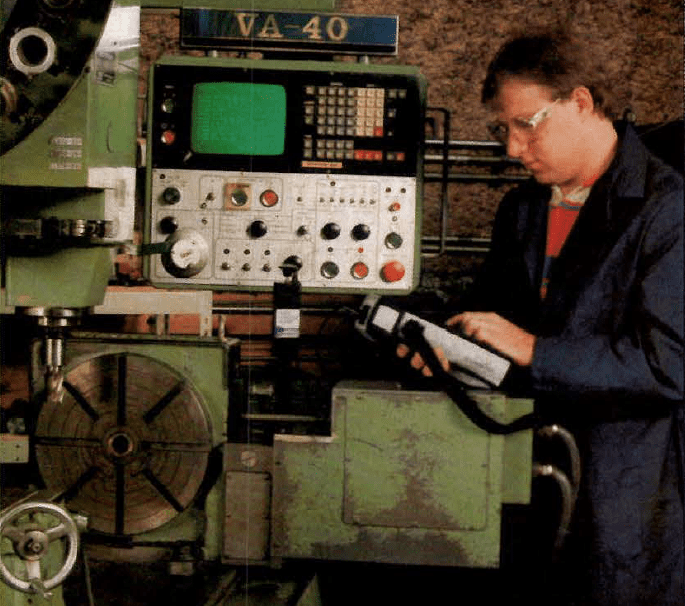
It can take just one breakdown of a critical machine to spin an entire plant into an immediate production halt. At this point, it is too late for the plant manager to do anything but call a service technician, then gasp for air while counting the lost production. Read More
-
Proactive Maintenance is the Cost Reduction Strategy for Diesel Engines and Gas Turbines
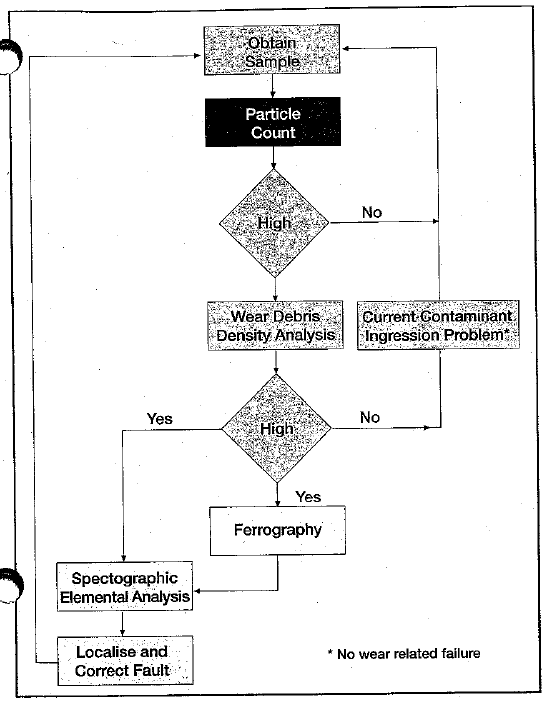
The field of maintenance technology is going through a revolution of change. Gone are the days when a machine had a predictable service life, after which it was replaced, continuing the cycle. Today, machinery and equipment can be maintained to achieve useful operating lives many times that attainable just a few years ago. Read More
-
The Difference Between Good Lubrication and Good Lubricants
Lacking real knowledge in lubrication, companies must still make lubrication decisions. Decisions often seem straightforward on the surface, but below this surface, they are plagued with pitfalls that can cost companies dearly. Read More
-
What is the No. 1 Cause and the No. 1 Consequence of Wear?
Particles. Think about it. Tribological studies on wear-related machine failure rank particle-induced abrasion as the No. 1 cause of wear. Read More
-
Dust Cakes: What Causes Them and Why You Should Care

We’ve all seen them. Perhaps some of us daily. Many take on a certain beauty, almost like a natural cave formation or a work of art. Most have organic characteristics like mosses or algae. Read More
-
Execute Lubrication. When it comes to oil analysis and lubrication, execution beats brilliance.
Execution is a continuous value-building activity, beginning with perhaps a marked change in your company’s maintenance philosophy. Read More
-
How Dirt can Contaminate a Lubricant

Do you really know how your lubricants become contaminated? Have you taken an inventory of the sources of contamination and the primary points of entry? If not, you are in the majority as sadly, few organizations go to the trouble of performing a contaminant ingression study. Read More
-
How Filters Work to Control Contamination in Oil

Imagine the filter inside your machine is made of fibers the size of telephone poles, stacked randomly in all directions, many layers thick. Each juncture where poles touch is a drop of super glue for support. To emulate actual operating conditions, the stack of poles is placed on a large moving and vibrating table. Read More
-
Increasing Demands Bring Advancements in Oil Filtration
Filtration has two primary objectives. The first objective is “protective”. This refers to creating a barrier to protect particle-sensitive machine components from the invasion of contaminants capable of causing sudden-death machine failure. Read More