-
Contamination Control Strategies for Planned Oil Cleanliness

Despite the good intentions of many organizations, real improvements in contamination control often remain an elusive concept. They know that invisible particles are one of the largest single contributors to progressive wear of machinery. Read More
-
Justifying the Cost of Excluding a Gram of Dirt [the economics of controlling contaminant ingression)

For years Noria has been saying, “The cost of excluding a gram of dirt is probably only about 10 percent of what it will cost you once it gets into your oil.” Recently, a Noria training client asked us to document proof of this statement. Read More
-
Quantifying The Contaminant Tolerance of Hydraulic Systems Using the Contaminant Life Index
Users of hydraulic equipment need to know how clean their fluid should be. The information and procedure for determining this has not been readily available in the past. Read More
-
Deploying the Invisible Filter
To some contamination control might seem a little like an old tune. After all, hasn’t filtration been around nearly as long as lubrication? And, what’s new that hasn’t already been thoroughly explored and widely applied? Read More
-
Establishing and Maintaining Levels of Cleanliness [in Lubricants]
Process plants and manufacturing companies have machinery lubricated by mineral-based or synthetic fluids and other machinery powered by lower viscosity hydraulic fluids. Read More
-
Filtering water from hydraulic oil
Water in a hydraulic system constitutes a serious form of oil contamination. However, water contamination is rarely recognized as such, hardly understood, and, until recently, considered difficult to combat. Read More
-
Filters can Remove Water from Hydraulic Fluid
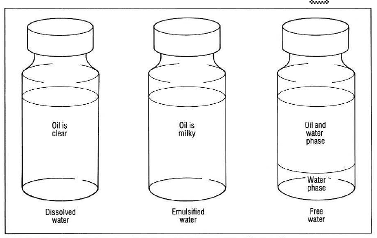
Here is the latest component for hydraulic system filtration and contamination control Water is a very serious contaminant in oil hydraulic systems. Yet, water contamination is rarely identified, poorly understood, and, until recently, considered very difficult to remove. Read More
-
Filters can remove the water from hydraulic oil
Water in a hydraulic system constitutes a very serious form of oil contamination. Technically, water contamination is rarely recognized as such, poorly understood, and, until recently, considered difficult to combat. Read More
-
Filters kunnen het water uit hydraulische olie verwijderen (Filters can remove the water from hydraulic oil)
Water in a hydraulic system constitutes a very serious contaminant of the oil. Nevertheless, water contamination itself is rarely recognized, poorly understood, and until recently, considered difficult to combat. Read More
-
How Filters Work to Control Contamination in Oil

Imagine the filter inside your machine is made of fibers the size of telephone poles, stacked randomly in all directions, many layers thick. Each juncture where poles touch is a drop of super glue for support. To emulate actual operating conditions, the stack of poles is placed on a large moving and vibrating table. Read More
-
Increasing Demands Bring Advancements in Oil Filtration
Filtration has two primary objectives. The first objective is “protective”. This refers to creating a barrier to protect particle-sensitive machine components from the invasion of contaminants capable of causing sudden-death machine failure. Read More
-
Proactive Maintenance the Cost-Reduction Strategy
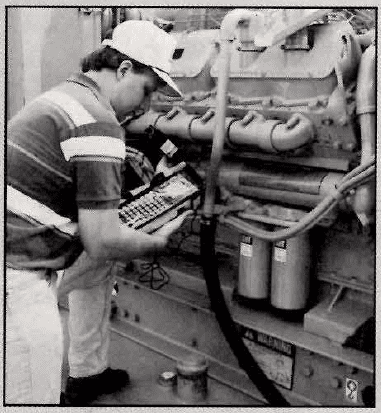
The field of maintenance technology going through a revolution of change. Gone are the t days when a machine had a predictable service life, after which it was replaced, continuing the cycle. Today, machinery and equipment can be maintained to achieve useful operating lives many times that attainable just a few years ago. Read More