-
Advancements in Fluid Analysis Technologies and Strategies for Hydraulic SystemCondition-Based Maintenance
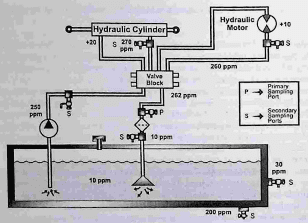
World-class condition monitoring of hydraulic systems involves the successful integration of a number of strategic elements. While in the past, walk-around inspections and gage data were the primary means of monitoring system health, today’s modem oil analysis programs apply a host of sophisticated new tools and instruments. Read More
-
Booklet: Engine Oils and Their Filters, Understanding Oil Lubrication and Contamination Control

A great deal of research and new technology have advanced the fields of oil lubrication and contamination through oil filters. If you still think (as many do), that “All oil filters do the same thing, so why pay more for a brand name?” then it may be time to reconsider. Read More
-
Hydraulic Fluid Analysis: Avoiding the Potential Pitfalls

Analysis of hydraulic fluids, if done properly, can suggest maintenance procedures to improve hydraulic equipment reliability and extend system life. Significant cost savings can result. Read More
-
Introducing Condition Alarm Mapping (CAM)
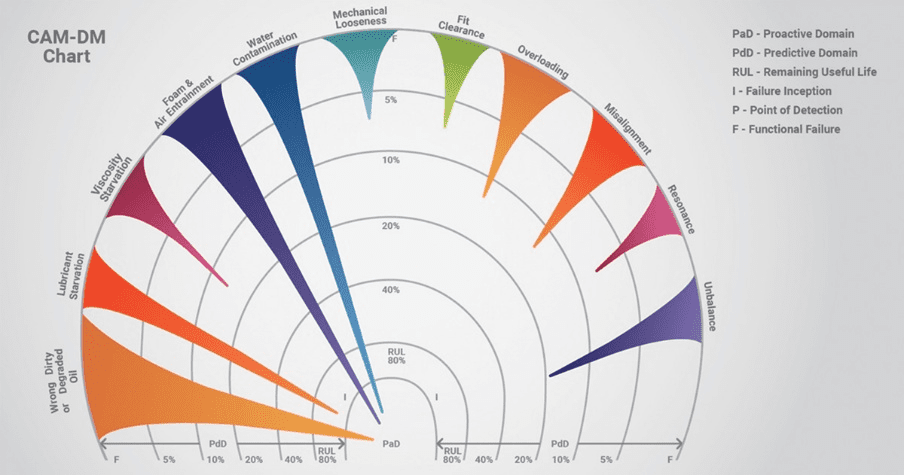
The sheer number of infographics in the condition monitoring field is staggering; they show up on social media, and in conference presentations, whitepapers, websites and books. Infographics are effective at helping people comprehend difficult concepts that integrate an array of variables and factors. Read More
-
Proactive and Predictive Strategies for Setting Oil Analysis Alarms and Limits
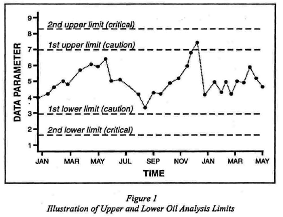
Abstract: In oil analysis, well placed alarms and limits are like trip wires, alerting operators and technicians to an untoward or threatening condition. Oil analysis limits can vary considerably according to machine type, oil type, and reliability goals. This paper discusses four distinct types of limits and how they are applied to different machine and… Read More
-
Review of Degradation Mechanisms Leading to Sludge and Varnish in Modem Turbine Oil Formulations
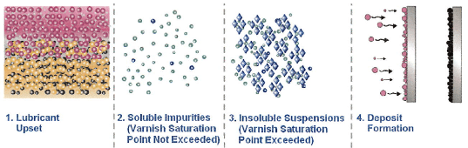
A wide range of fluid degradation and contamination-related issues can affect turbine lube oil systems. One serious and growing concern is the presence of sludge and varnish. Read More
-
Sampling Methods for Used Oil Analysis

Sampling is arguably the most important step in the oil analysis process. If the sample in the bottle fails to effectively represent the lubricant and the condition of the machine from which it was drawn, no meaningful conclusions can be from the oil analysis data. Read More
-
Should New Lubricant Deliveries be Tested?

They are labeled and stored by humans. When it comes to humans, there is one inalterable constant – we make mistakes. Sometimes this is due to lack of vigilance. Sometimes it’s lack of knowledge. It might even be because of indifference. Read More
-
An Introduction to Fluid Contamination Analysis
Oil contamination may be defined as any foreign material found in the lubricant which is not added by design. Usually, contaminants are not beneficial, and may be detrimental, to the performance of the oil and/or the operating machinery. Read More
-
Intervention is Key to Machine Life Extension

Try this simple experiment. With notepad in hand, go out into your plant and walk around a sampling of your most critical machines. These are the ones that have high probability of failure and/or the greatest consequences of failure. Read More
-
Oil Sampling Mistakes to Avoid

I recently received an e-mail from a colleague seeking my opinion about a specific sampling philosophy. Referring to mobile equipment such as excavators, scrapers and dozers, he asked if good oil sampling depended much on sampling location. Read More
-
Proactive Maintenance – The New Technology for Cost-Efficient Contamination Controlof Mechanical Machinery
It has been proven that almost all mechanical failures are caused by contamination; hard particle contamination to be ·specific. Once the root cause of machine failure has been defined, a program to correct these failures, extend machine life, and reduce maintenance costs must be developed. Such a program has been developed; it is called Proactive… Read More
-
The Accuracy and Reliability of Optical Particle Counters with Industrial Oils and Hydraulic Fluids
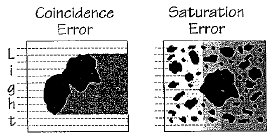
Optical particle counters (OPC’s) have a long history of use in industrial hydraulic applications. Traditionally, their success has been limited to scientific laboratories and other highly controlled environments. Read More
-
The Basics of Used Oil Sampling

Proper oil sampling is critical to an effective oil analysis program. Without a representative lube sample, oil analysis cannot be used effectively to monitor oil condition, predict machine failures or help you extend asset life. Read More
-
The Difference Between Good Lubrication and Good Lubricants

I have learned that excellence in lubrication is just as difficult to realize as it is rare to find. The reasons for this are many. One simple explanation is the field of lubrication is a specialty that takes education and years of experience to master – like most professions. Read More
-
Effective Lube Oil Management

The first step in designing a lubrication management program is to have a qualified professional perform a lubrication audit. Its objectives should be to: Read More
-
Interpreting Contaminant Analysis Trends into a Proactive and Predictive Maintenance Strategy

Condition monitoring can be easily performed by following a few simple principles. Among these principles include monitoring two sets of conditions. Read More
-
Listen to Your Lubricant

Arguably, more change has occurred related to lubricant analysis and condition monitoring in the past 30 years than all other areas of lubrication. Why does this make sense? The wisest among us know that relentless measurement is a key enabler to forward progress and change. Measurement leads us to awareness and finally to action (tangible… Read More
-
Measure by Measure [oil analysis in machine condition monitoring]
By some estimates, condition monitoring has been around for more than a century, but it is only within the last 5-10 years (and particularly the last 2 or 3) that interest has been at fever pitch. Read More
-
Standby Equipment Oil Monitoring and Maintenance

Many lubricants residing in standby equipment have only a few hours of service life. These few hours may be only from occasional scheduled restarts, typically circulating the oil at low load, sometimes barely warming it to operating temperature. In other cases, standby, laid-up and peak-load equipment may sit for weeks or even months without use. Read More