-
Food-grade Lubricants and the Food Processing Industry

The food processing industry presents unique challenges to lubricant formulation engineers, lubricant marketers, plant lubrication engineers, equipment designers, and builders. While it is never desirable for lubricants to be allowed to contaminate raw materials, work-in-progress. or finished product, the consequences of a lubricant contaminated product is rarely more acute than in the food processing industry.…
-
Four Lethal Diesel Engine Oil Contaminants

Some contaminants are important to monitor and analyze because they are root causes of premature oil degradation and engine failure. Other contaminants are symptomatic of an active failure condition that requires a response other than just an oil change.
-
Fundamentals Of Fluid Analysis for Industrial Machinery

Every industrial organization has experienced the consequences of shoddy maintenance: contract penalties, junked parts, injuries, catastrophic damage, ballooning costs, missed shipping dates, irate customers, and sickly quarterly financial reports. Today, machinery and equipment can be maintained to achieve useful operating lives many times those attainable just a few years ago. For oil lubricated machinery, the…
-
Hazards of Changing Lubricant Brands
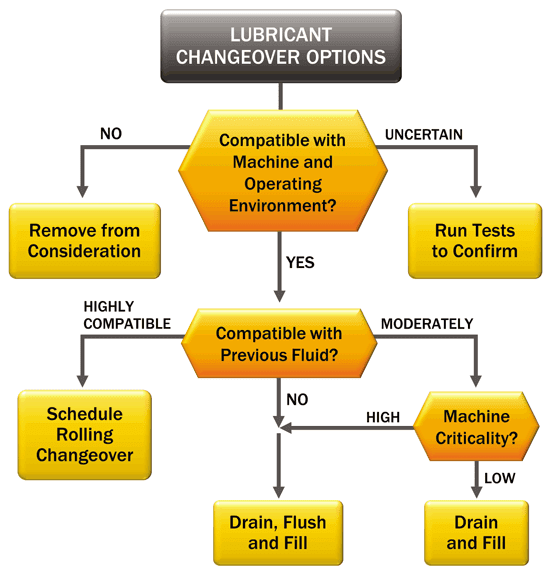
After a short bedding-in time at an elevated temperature, which allows the base oil and additives to chemically and physically interact, the mixtures are ready to be inspected and tested further.
-
How Grease Kills Bearings

What’s life like inside a rolling element bearing? Let’s say you are a dollop of grease and you’ve just been pushed by a grease gun into the dark recesses of a bearing cavity. You are now in a combat zone. What are your orders? Maybe you are on a suicide mission. Your bearing has been…
-
How the IIoT Is Changing Condition Monitoring
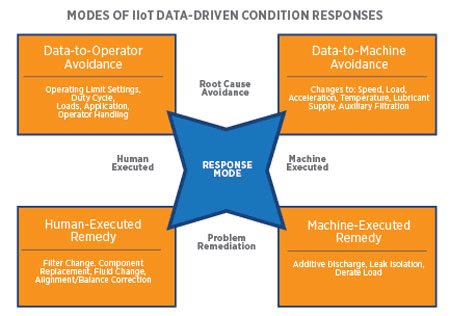
The industrial internet of things (IIoT) and Industry 4.0 are already unleashing enormous value in plants around the world. It seems that today’s younger, digital workforce is the energy that propels this change. Past efforts had been sluggish to say the least.
-
Hydraulic Fluid Analysis: Avoiding the Potential Pitfalls

Analysis of hydraulic fluids, if done properly, can suggest maintenance procedures to improve hydraulic equipment reliability and extend system life. Significant cost savings can result.
-
Interview with Luminary Professor H. Peter Jost – The Man who Gave Birth to the Word “Tribology”

In September 2005, I attended the World Tribology Congress (WTC) in Washington, D.C. along with hundreds of tribology dignitaries from around the world. The WTC was sponsored by the International Tribology Council, an organization headed by H. Peter Jost.
-
Introducing Condition Alarm Mapping (CAM)
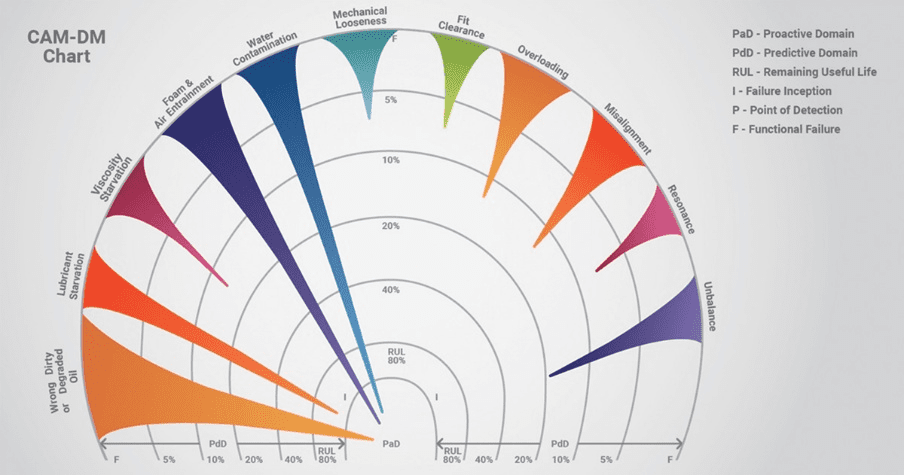
The sheer number of infographics in the condition monitoring field is staggering; they show up on social media, and in conference presentations, whitepapers, websites and books. Infographics are effective at helping people comprehend difficult concepts that integrate an array of variables and factors.
-
Linking Enhanced Reliability to the State of Lubrication
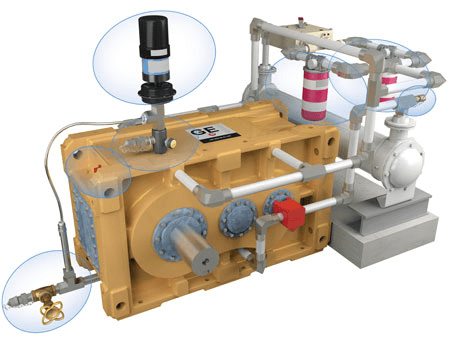
The lubricant Optimum Reference State (ORS) is a critical concept in the journey to world-class lubrication and enhanced machine reliability. In short, it is the prescribed state of machine configuration, operating conditions and maintenance activities required to achieve and sustain specific reliability objectives.
-
Lubricant Consolidation: Steps and Benefits
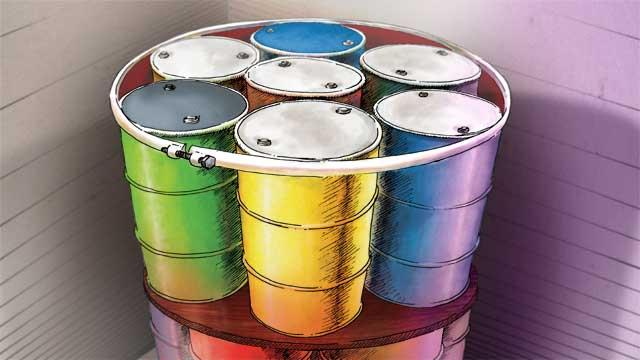
In the interest of reducing purchasing costs and streamlining storage and handling, many organizations have substantially slashed the number of lubricant SKUs (stock keeping units) they use.
-
Lubricant Quality – How Does the Chain of Custody Affect It?
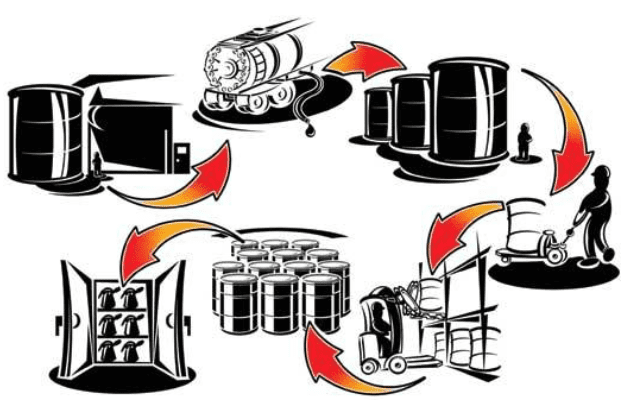
Lubricant users are increasingly inquiring about the cleanliness and lubricant quality of new oil deliveries. This trend is logical and probably unending as the maintenance field becomes more aware of the linkage between contamination and machine reliability. Yet there has been legitimate concerns raised by some lubricant suppliers regarding this trend.
-
Lubrication as a Profession
It is often said that industry rides on a film of oil. Many of us in the lubrication field know that this film of oil is frequently taken for granted. In fact, it needs constant nurturing. Like a plant that needs the right amount of water and sunlight (not too much, not too little), machines…
-
Lubrication Training in the Reliability Era
Over the past ten years machine-dependent industrial sites have been reinventing their views about equipment maintenance – adopting a reliability focus. One might say that maintenance has always been about reliability, but today, more and more organizations are taking that connection very seriously, whereas in the past, the term reliability was- casually associated with the…
-
Machinery Lubrication Engineer: A Professional Certification
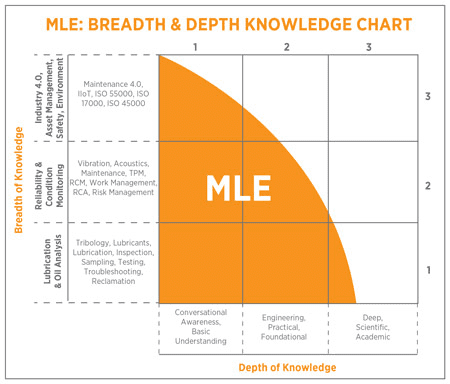
I’m proud to say that the Machinery Lubrication Engineer (MLE) certification has become a reality. Through studying and testing, qualified candidates can earn the right to hold this prestigious title, and Noria has developed a training course to help students prepare. Unlike other exams and certifications related to lubrication and lubricant analysis, the MLE stands…
-
Make the Lube Room Your Lubrication Command Center
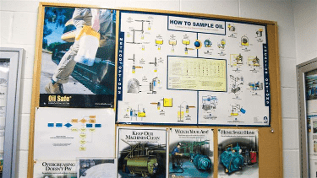
For any plant seeking lubrication excellence, there needs to be a visual starting point that sets the stage for what’s to come elsewhere in the facility. There is no better place for that than the lube room. In fact, I’ve never heard of a plant exhibiting excellence in machinery lubrication that doesn’t also exude excellence…
-
Moisture – The Second Most Destructive Lubricant Contaminant
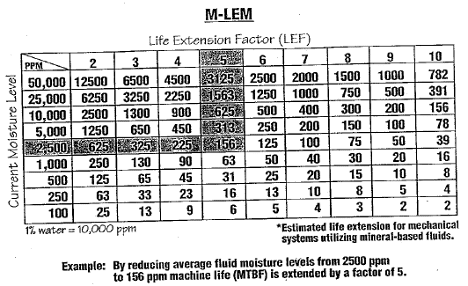
With few exceptions, the chemical and physical stability of lubricants are threatened by even the slightest amount of suspended water.
-
Moisture… the Second Most Destructive Lubricant Contaminant, and its Effects on Bearing Life

Moisture is generally referred to as a chemical contaminant when suspended in lubricating oils. Its destructive effects in bearings can reach or exceed that of particle contamination, depending on conditions.