Books & Book Chapters
Jim Fitch authored lubrication & analysis books & chapters
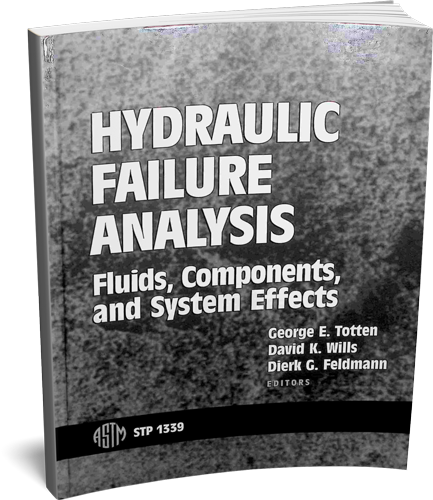
Hydraulic Failure Analysis: Fluids, Components, and System Effects
Chapter: Advancements in Fluid Analysis Technologies and Strategies for Hydraulic System Condition-Based Maintenance
World-class condition monitoring of hydraulic systems involves the successful integration of a number of strategic elements. While in the past, walk-around inspections and gage data were the primary means of monitoring system health, today’s modern oil analysis programs apply a host of sophisticated new tools and instruments.

Automotive Lubricants and Testing
Chapter: Analysis of In-Service Automotive Engine Oils
Most oil analysis performed in North America is done on diesel engine crankcase oils, primarily for large fleets in the transportation and off-road equipment industries. Ranking second would be the analysis of lubricants used in stationary industrial machinery including compressors, turbines, gearing, bearing lubes, and hydraulics. Far down the list is engine oil analysis performed on crankcase lubes from automotive fleets or privately owned cars and trucks.

Condition Monitoring ’94
Chapter: Applying Satellite Communications Technology for Remote Equipment Monitoring
In the business realm today, an enterprise must achieve optimum efficiency in every area in order to survive in the marketplace. One area that concerns many is that of maintenance. Maintenance has been described as a business’s “largest controllable expenditure.”
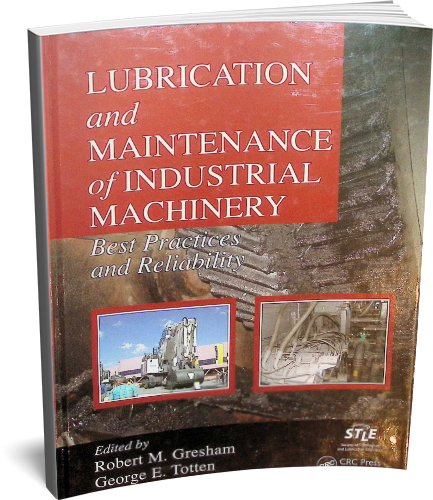
Lubrication and Maintenance of Industrial Machinery
Chapter: Conservation of Lubricants and Energy in Industrial Applications
Many of the materials essential to global industrial markets have been identified as being in potential short supply. A substantial number of those materials originate from regions of the world where interrupted supply is a real and present risk. Petroleum is a finite world resource with continuing supply and economic problems, with more special concerns for fuels than for petroleum-based lubricants. It is the objective of this chapter to present specific conservation practices for lubricants and functional (hydraulics, coolants, etc.) fluids used in tribological components and for energy. The treatment will necessarily be brief, but references will point to more detail information.

Tribology Data Handbook
Chapter: Elements of an Oil Analysis Program
Most often, users associate an oil analysis program with a systematic early alert to oil or machine failure, i.e., damage control. While these benefits are helpful and frequently achieved, they should be regarded as low on the scale of importance compared to the more rewarding objective of failure avoidance.

Engine Oils and Their Filters
Chapter: Engine Oils and Their Filters: Selection and Maintenance
A great deal of research and new technology have advanced the fields of oil lubrication and contamination through oil filters. If you still think (as many do), that “All oil filters do the same thing, so why pay more for a brand name?” then it may be time to reconsider.

Operating Equipment Asset Management Handbook
Chapter: Fluid Analysis for Industrial Equipment: Best Practices and Applications
Every industrial organization has experienced the consequences of shoddy maintenance: contract penalties, junked parts, injuries, catastrophic damage, ballooning costs, missed shipping dates, irate customers, and sickly quarterly financial reports. Today, machinery and equipment can be maintained to achieve useful operating lives many times those attainable just a few years ago. For oil lubricated machinery, the opportunities surround what is commonly referred to as proactive maintenance.
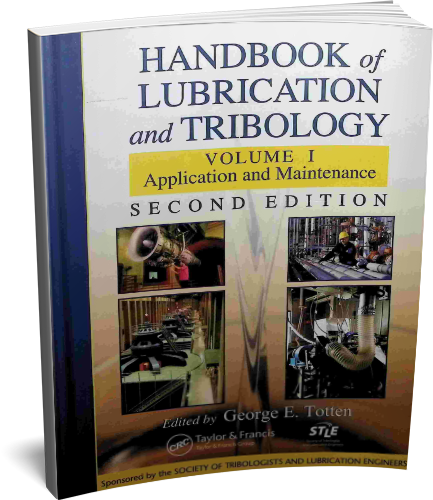
Handbook of Lubrication and Tribology
Chapter: Food-Grade Lubricants: Selection, Standards, and Applications
The food processing industry presents unique challenges to lubricant formulation engineers, lubricant marketers, plant lubrication engineers, equipment designers, and builders. While it is never desirable for lubricants to be allowed to contaminate raw materials, work-in-progress, or finished product, the consequences of a lubricant contaminated product is rarely more acute than in the food processing industry. As such, lubricants used in this industry have requirements, protocols, and performance expectations that go well beyond typical industrial lubricants.
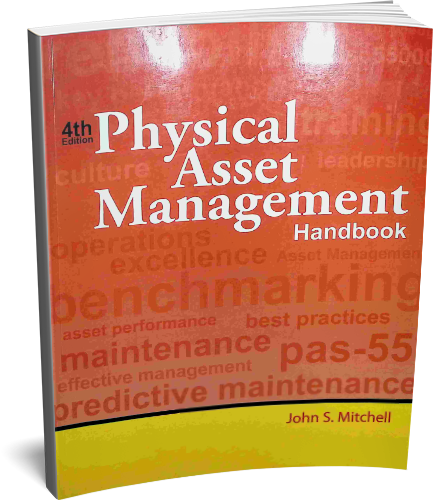
Physical Asset Management Handbook
Chapter: Fundamentals of Fluid Analysis: Principles and Techniques
Every industrial organization has experienced the consequences of shoddy maintenance: contract penalties, junked parts, injuries, catastrophic damage, ballooning costs, missed shipping dates, irate customers, and sickly quarterly financial reports. Today, machinery and equipment can be maintained to achieve useful operating lives many times those attainable just a few years ago. For oil lubricated machinery, the opportunities surround what is commonly referred to as proactive maintenance. Carefully monitoring and controlling the conditions of the oil (nurturing) can systematically eliminate many of the root causes of failure. Case studies of highly successful organizations show that oil analysis plays a central role in this nurturing activity. For oil analysis to succeed, the user organization must first define the goals of the effort.
Condition Monitoring
Chapter: Fuzzy Logic Expert Systems for Equipment Condition Assessment
Condition control is defined as the interactive processes of condition monitoring, condition analysis, and condition response. A model is presented which employs the use of expert systems to achieve real-time condition control of a hydraulic system. The approach focuses on the use of fuzzy logic to achieve machine intelligence to monitor and analyze pre-degradation ‘incipient’ failure and impending conditions. Also discussed are the corresponding real-time ‘reactive’ condition responses, coupling system control with condition control.

How to Develop a “Win-Win” Relationship With Your Oil Analysis Lab
Chapter: How to Develop a Win-Win Lab Relationship
Turning an oil analysis program into a feisty profit center is well within reach of today’s modern maintenance organizations. In fact, it is commonly achieved. The strategy, perhaps, depends less on what the data is trying to communicate than the confidence the user assigns to the data. In fact, successful users of oil analysis have learned that achieving high confidence in oil analysis data is a team effort; the goals and responsibilities are shared equally between both the user and the laboratory. Such programs, when well-applied, result in a satisfying win-win business relationship.

Fuels and Lubricants Handbook: Technology, Properties, Performance, and Testing
Chapter: Hydrocarbon Analysis: Techniques and Applications
The aim of this chapter is to briefly present six analytical methods for characterizing hydrocarbon compounds found in fuels and lubricants. The methods presented are NMR spectrometry, gas chromatography, liquid chromatography, ultraviolet spectroscopy, mass spectrometry, and infrared spectroscopy. The analysis of hydrocarbons deploying these methods is well-founded in scientific laboratories and is the basis of numerous ASTM standards. Because of the large body of published work on these methods, it is not the intention of the authors to attempt complete coverage of all methods, but rather to provide an overview of their use in the analysis of fuels and lubricants. Following each section are summaries specific to ASTM D 02 standards where the analytical method is deployed in the areas of fuels and lubricants.

Profitable Condition Monitoring
Chapter: Interpreting Contaminant Analysis Trends
Condition monitoring can be easily performed by following a few simple principles. Among these principles include monitoring two sets of conditions: 1. The operating and environmental conditions that precede failure, and 2. Early-stage failure symptoms. Several models are presented that show the benefits of monitoring machine conditions, as well as the consequences of ignoring them. Also discussed is the integration of both proactive and predictive maintenance techniques to extend machine life.
Condition Monitoring ’99
Chapter: Maximizing Fault Detection in Rotating Equipment
The analysis of power train lubricants for the purpose of detecting faults and abnormal wear patterns is a well developed practiced in mobile equipment applications. However, these same techniques don’t always transfer successfully into stationary equipment applications for many users. In recent years new approaches and techniques have been perfected to substantially improve the detection of incipient and developing faults in bearings and gear units using wear debris analysis. The approach is more systemic as opposed to the application of any singular new or emerging technology. It begins with improvements in the sampling process to enrich the data and proceeds through the use of tactics that strengthen the signal-to-noise ratio. After detection is confirmed, the final analytical phase involves wear particle identification using both classic and advanced techniques.

Current Trends in Industrial Tribology
Chapter: New Approach to Maintaining Industrial Equipment
When it comes to the life of any machine, cleanliness counts. Moisture, air heat and hard particles are all detrimental to fluid systems. Acting alone or in some combination, these factors are the root causes of most fluid system failures. Of these four root causes, particulate contamination – the population of abrasive solids (dirt, metal and other particles) found in fluids is the prime enemy. A survey of industrial plant facilities uncovered that “…. between 50 and 75 percent of hydraulic system failures are a direct result of fluid contamination”.
Condition Monitoring, Troubleshooting, and Reliability in Rotating machinery
Chapter: Optimizing Lubrication and Lubricant Analysis Programs
Lubrication is an unmistakably integral part of machine reliability. Rotating machines are dependent on lubrication decisions made, such as which lubricant to use, how the lubricant needs to be applied to the tribological zones, and what is done during operations to monitor and control the integrity of these frictional zones.
Handbook of Hydraulic Fluid Technology
Chapter: Particle Contamination in Hydraulic Fluids: Detection and Control
It has been extensively documented and widely stated that particle contamination is the number one cause of wear and failure of hydraulic components. The problem is generally more pronounced than in other types of machinery incorporating circulating systems that use similar types of oils. This heightened contaminant sensitivity is due to the high pressures and tight tolerances which are characteristic of modern hydraulic machines. Pressure is known to have a disproportionate effect on contaminant sensitivity.

1998 Technology Showcase
Chapter: Proactive and Predictive Strategies for Equipment Reliability
Abstract: In oil analysis, well placed alarms and limits are like trip wires, alerting operators and technicians to an untoward or threatening condition. Oil analysis limits can vary considerably according to machine type, oil type, and reliability goals. This paper discusses four distinct types of limits and how they are applied to different machine and lubricant applications: goal-based limits, aging limits, rate-of-change limits, and statistical limits.
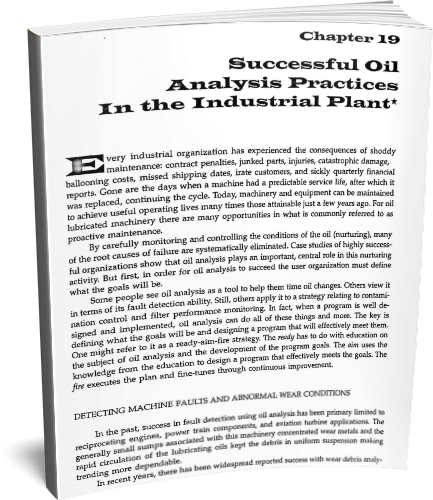
Successful Oil Analysis Practices In the Industrial Plant
Chapter: Successful Oil Analysis Program in the Industrial Plant
Every industrial organization has experienced the consequences of shoddy maintenance: contract penalties, junked parts, injuries, catastrophic damage, ballooning costs, missed shipping dates, irate customers, and sickly quarterly financial reports. Gone are the days when a machine had a predictable service life, after which it was replaced, continuing the cycle. Today, machinery and equipment can be maintained to achieve useful operating lives many times those attainable just a few years ago. For oil lubricated machinery there are many opportunities in what is commonly referred to as proactive maintenance.
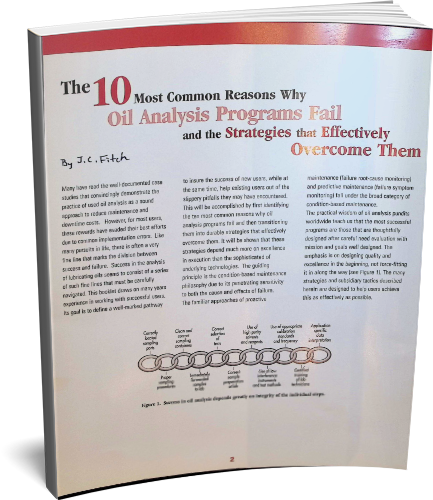
The Ten Most Common Reasons Why Oil Analysis Programs Fail
Chapter: The Ten Most Common Reasons Why Oil Analysis Programs Fail
Many have read the well-documented case studies that convincingly demonstrate the practice of used oil analysis as a sound approach to reduce maintenance and downtime costs. However, for most users, these rewards have evaded their best efforts due to common implementation errors. Like many pursuits in life, there is often a very fine line that marks the division between success and failure. Success in the analysis of lubricating oils seems to consist of a series of such fine lines that must be carefully navigated. This booklet draws on many years experience in working with successful users.
The Practical Handbook of Machinery Lubrication – 4th Edition
Become the lubrication expert in your company. There’s a good reason The Practical Handbook for Machinery Lubrication is our all-time best-selling book. It’s packed with useful, actionable information that you’ll put to use right away. It answers the tough questions and is written so that anyone can understand it. Once you start reading this book, you probably won’t stop until you finish it. It is that easy to read.

How to Select a Motor Oil and Filter for Your Car or Truck
When it comes to changing your oil – where do you get your advice? Friends? Salesmen? Commercials? Before spending any more money on oil changes, synthetic oils, premium filters, engine flushes or oil treatments, learn what leading lubrication expert Jim Fitch recommends.
Sourcebook for Used Oil Elements
Does Your Oil Analysis Report Reveal… Cr in your hydraulic fluid? Mn in your compressor lubricant? Cu in your gear oil? Quit guessing what these elements are and how they got into your oil. The Sourcebook or Used Oil Elements can help you pinpoint the source.

Daily One-Minute Lubrication Inspections and Field Tests
Routine inspection of a machine’s lubrication system is one of the easiest and most productive ways to avoid equipment failure. This book describes many lubrication-related variables that can be quickly and easily monitored in a short timeframe. These inspections will be revealing, and can serve as the foundation of a precision lubrication management program.
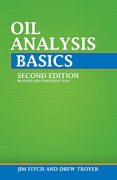
Oil Analysis Basics – Second Edition
Oil Analysis Basics presents the fundamentals of oil analysis for machinery condition monitoring in an easy to understand format. You will learn everything from how to take a proper oil sample to how to select a test slate for your applications. With more than 90 illustrations, figures and lookup tables, you’ll reference Oil Analysis Basics for years to come.