-
Analysis of In-Service Automotive Engine Oils

Most oil analysis performed in North America is done on diesel engine crankcase oils, primarily for large fleets in the transportation and off-road equipment industries. Ranking second would be the analysis of lubricants used in stationary industrial machinery including compressors, turbines, gearing, bearing lubes, and hydraulics. Far down the list is engine oil analysis performed…
-
Applying Satellite Communications Technology to Condition-Based Maintenance for Mobile Equipment
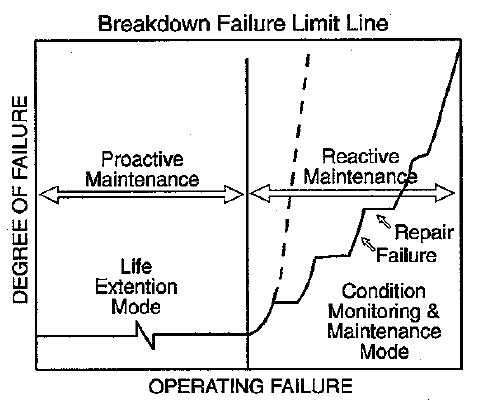
The advent of unattended sensor technologies has placed a particular challenge on data communication for machine surveillance monitoring. This challenge is magnified when mobile equipment and large geographic territories are involved.
-
Ban the Can: Sealable, Reusable Oil Containers Are Smarter Option
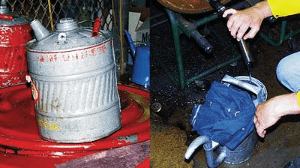
The oil can was in need of a major redo years ago. It was grossly outdated in terms of modern views and needs relating to lubrication and machinery reliability.
-
Be Alert to Heat as Both a Contaminant and a Symptom

Excessive heat is a severe contaminant. It wreaks havoc on oil (chemically and physically) and retards lubricant performance by increasing wear, corrosion and friction. Friction and wear cause more heat, which sends the machine into a cycle of despair.
-
Be Proactive to Avoid Root Cause Fault Bubbles
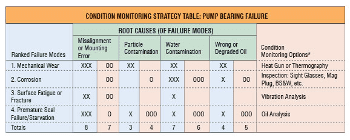
No warning or short-warning failures are the worst kind. Think of a tire. It can wear out slowly over thousands of driving miles or rupture suddenly, at full highway speed, from a random piece of road debris. You can monitor tread loss over time and conveniently schedule a tire change. Conversely, who could predict the…
-
Best Practices in Maximizing Fault Detection in Rotating Equipment Using Wear Debris Analysis

The analysis of power train lubricants for the purpose of detecting faults and abnormal wear patterns is a well developed practiced in mobile equipment applications.
-
Clean Oil Reduces Engine Fuel Consumption
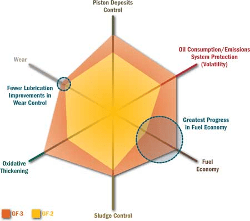
When a lubricant degrades, it forms reaction products that become insoluble and corrosive. So too, the original properties of lubricity and dispersancy can become impaired as the lubricant ages and additives deplete.
-
Control and Management of Particle Contamination in Hydraulic Fluids
It has been extensively documented and widely stated that particle contamination is the number one cause of wear and failure of hydraulic components. The problem is generally more pronounced than in other types of machinery incorporating circulating systems that use sirnjlar types of oils.
-
Control Moisture Ingression with Tactical Inspection 2.0
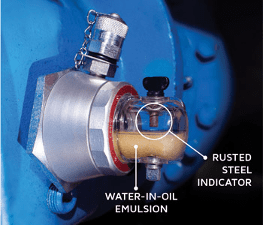
You don’t have to remove what you don’t allow to enter. Indeed, it’s hard to challenge the logic and value of controlling water ingression, but because moisture is everywhere, achieving bone-dry oil through exclusion alone may not be practical or even necessary.
-
Copper and Your Diesel Engine Oils

I recently analyzed a database of more than 30,000 oil analysis reports from diesel engine samples (Class 8, long-haul trucks). With so much information at my fingertips, I was like a kid in a candy store.
-
Creating an Engineering Specification for Lubrication Excellence
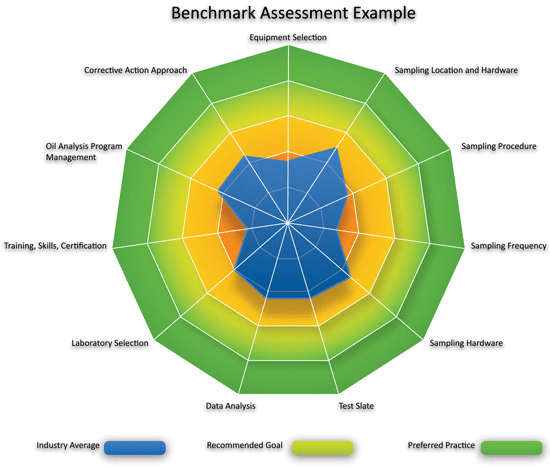
These days an increasing number of companies are trying to achieve a state of lubrication called “lubrication excellence.” Others might call this “world-class” lubrication.
-
Defining and Executing Excellence in Lubrication
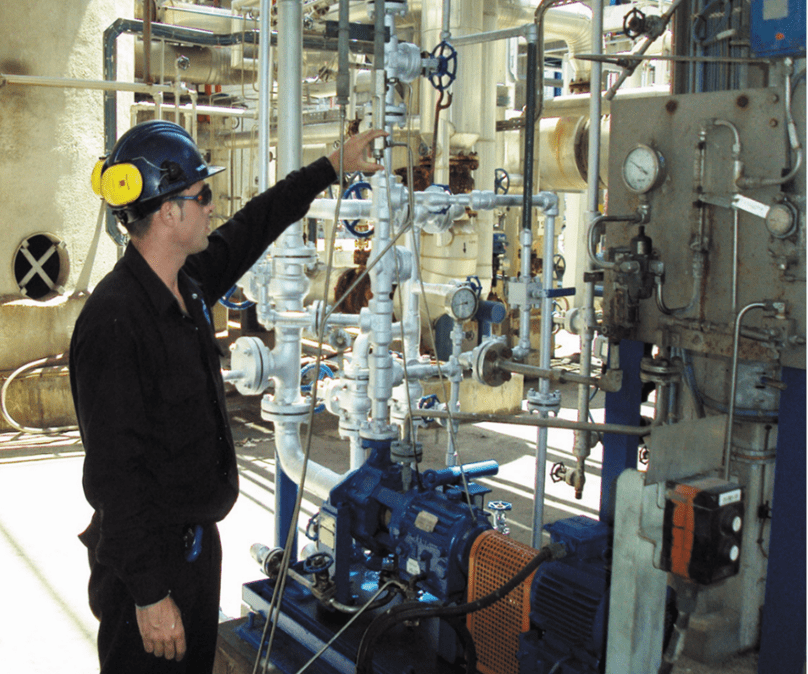
When it comes to oil analysis and lubrication, it goes without saying that execution beats brilliance. And, this execution does not mean a single high-impact feat. Instead, it is a continuous value-building activity, beginning with perhaps a marked change in maintenance philosophy. Many refer to this as a nurturing process, i.e., nurturing your oil and…
-
Diagnosing a Cloudy Oil
Most of us know that healthy lubricants are generally clear and bright. However, as oils age they can lose their luster, and many become dark and opaque. These optical changes are often important symptoms of impending problems that, if occur prematurely, merit further analysis and corrective action.
-
Does Your Company Need a Maintenance Culture Intervention?

Let’s face it, most companies need a culture intervention – something like a 12-step program. This article will explore behavioral issues that are often at the core of a culture of neglect and mediocracy. It borrows much from management science, leadership principles and conversations with individuals working in the field of maintenance reliability.
-
Don’t Forget Lubricant Criticality When Designing Oil Analysis Programs
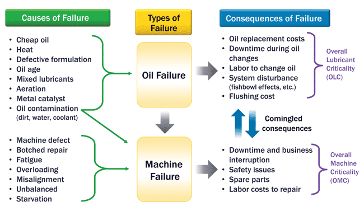
It is intuitively obvious that smart maintenance decisions require a heightened sense of both the probability and consequences of machine failure.
-
Don’t Ignore Viscosity Index When Selecting a Lubricant
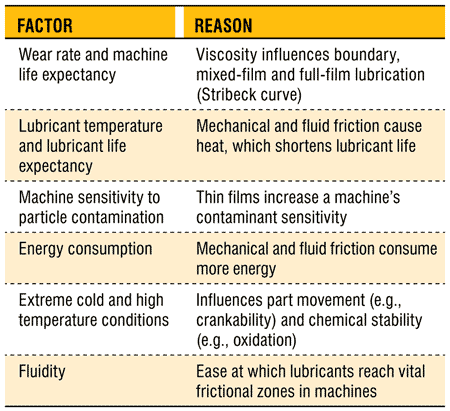
Too often the viscosity index (VI) is disregarded as a lubricant selection parameter. One reason is simply because it is poorly understood.
-
Elements of a Successful Oil Analysis Program – Part I & II

Most often, users associate an oil analysis program with a systematic early alert to oil or machine failure, i.e., damage control. While these benefits are helpful and frequently achieved, they should be regarded as low on the scale of importance compared to the more rewarding objective of failure avoidance.
-
Evolution of Maintenance Man
In the world of maintenance, there are two kinds of companies – those who are modernizing their maintenance programs and those who will. Companies on the trailing edge face one of two risks depending on their industry and geography: