Articles & Resources
-

The Seven Levels to Lubrication Excellence
Rome was not built in a day. Transformational change takes time. You’ve heard the expression, “once begun, you’re halfway done.” Read More
-

The Usefulness of Particle Counting in Oil Analysis
Optical particle counters (OPC’s) have a long history of use in industrial hydraulic applications. Traditionally, their success has been limited to scientific laboratories and other highly controlled environments. Read More
-
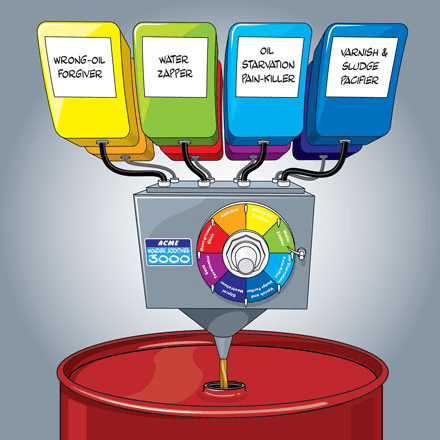
These Additives Don’t Exist
I’m afraid I have some bad news … and no, it’s not about the economy. It’s about what I often call “imaginary additives”. These are the additives that seem to exist in the minds of many lubrication practitioners but don’t exist in the physical world of lubrication reality. Read More
-
Three Important Words for Success in Lubrication and Oil Analysis
TRAIN-YOUR-PEOPLE. Using oil analysis to enhance machine reliability is really too simple. Behind the appearances of complexity and vale of high science are the most basic of concepts. We can try to make it difficult, but why? Read More
-

Tricks to Classifying Wear Metals and Other Used Oil Suspensions
The most common methods for initial detection of abnormal levels of wear debris in used oils include elemental analysis, ferrous density analysis (DR, etc.), particle counting and patch testing. For some users, because of the criticality of the application, all of these screening tests for wear metals are integrated into the routine test slate. Read More
-

Use Lubricant Zone Inspections for Early Problem Detection
Early detection means frequent detection. While daily one-minute visual inspections have been discussed previously in Machinery Lubrication magazine, many questions remain, including where and how you inspect, what the observed conditions mean, and how you penetrate a machine’s exoskeleton exterior without X-ray vision. Read More
-

What is Your Oil’s Impurity-holding Capacity (IHC)?
There has been much said in recent years about the increased propensity of some modern oil formulations to produce sludge and varnish. Ironically, many of the oils accused of contributing to varnish are the same oils endowed with exceptionally high oxidation stability due to advanced refining technology and formulation science. Read More
-
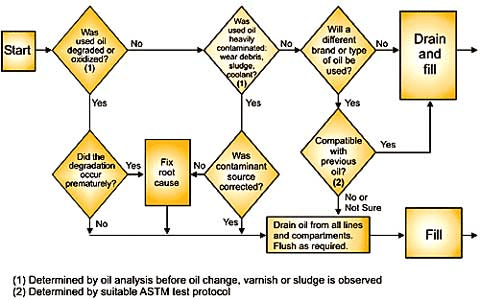
When to Perform an Oil Flush
What should you do when a lubricant doesn’t get a clean bill of health? More specifically, what must be done with the machine that contained a degraded or contaminated lubricant after the oil drain? Is a flush required? Read More
-

Why Inspection 2.0 Is Your Best Strategy for Early Fault Detection
Inspection, in its most basic form, has been around forever. However, like most things in life, what you get out of an activity depends entirely on what you put in. This column is about radical reinvention of the whole concept of machine inspection. It has little to do with conventional practices of doing daily machine… Read More
-

Why Lubricant Supply Contracts No Longer Go to the Lowest Bidder
Though typically treated as a commodity by many, the lubricant is a vital component of the machine. For many organizations, the quality of lubrication is the single greatest factor that influences machinery reliability and productivity. Read More
-
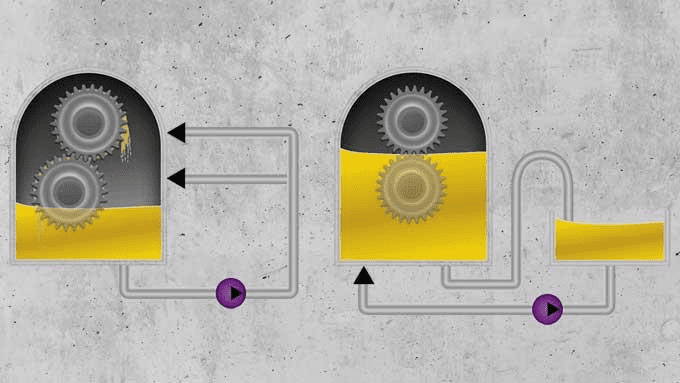
Add Oil Circulation to Gear and Bearing Sumps for Greater Reliability
The designs of many common machine mechanisms have not changed significantly in decades (centuries in some cases). This is especially true where lubrication is involved. Read More
-
An Introduction to Fluid Contamination Analysis
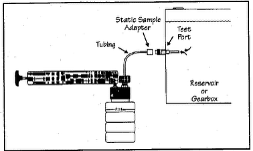
Oil contamination may be defined as any foreign material found in the lubricant which is not added by design. Usually, contaminants are not beneficial, and may be detrimental, to the performance of the oil and/or the operating machinery. Read More
-

Analysis of In-Service Automotive Engine Oils
Most oil analysis performed in North America is done on diesel engine crankcase oils, primarily for large fleets in the transportation and off-road equipment industries. Ranking second would be the analysis of lubricants used in stationary industrial machinery including compressors, turbines, gearing, bearing lubes, and hydraulics. Far down the list is engine oil analysis performed… Read More
-
Applying Satellite Communications Technology to Condition-Based Maintenance for Mobile Equipment
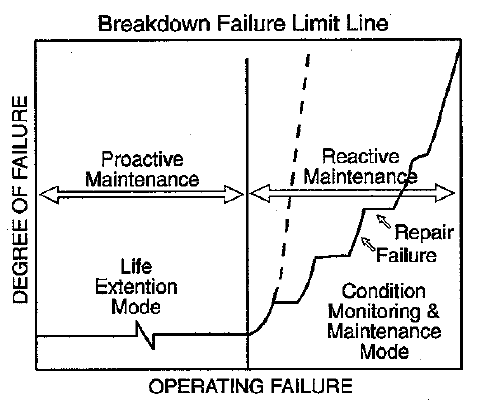
The advent of unattended sensor technologies has placed a particular challenge on data communication for machine surveillance monitoring. This challenge is magnified when mobile equipment and large geographic territories are involved. Read More
-
Ban the Can: Sealable, Reusable Oil Containers Are Smarter Option
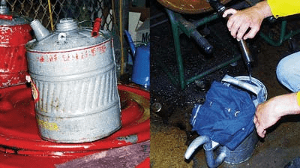
The oil can was in need of a major redo years ago. It was grossly outdated in terms of modern views and needs relating to lubrication and machinery reliability. Read More
-

Be Alert to Heat as Both a Contaminant and a Symptom
Excessive heat is a severe contaminant. It wreaks havoc on oil (chemically and physically) and retards lubricant performance by increasing wear, corrosion and friction. Friction and wear cause more heat, which sends the machine into a cycle of despair. Read More
-
Be Proactive to Avoid Root Cause Fault Bubbles
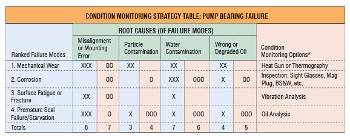
No warning or short-warning failures are the worst kind. Think of a tire. It can wear out slowly over thousands of driving miles or rupture suddenly, at full highway speed, from a random piece of road debris. You can monitor tread loss over time and conveniently schedule a tire change. Conversely, who could predict the… Read More
-

Best Practices in Maximizing Fault Detection in Rotating Equipment Using Wear Debris Analysis
The analysis of power train lubricants for the purpose of detecting faults and abnormal wear patterns is a well developed practiced in mobile equipment applications. Read More
-
Clean Oil Reduces Engine Fuel Consumption
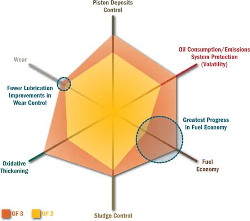
When a lubricant degrades, it forms reaction products that become insoluble and corrosive. So too, the original properties of lubricity and dispersancy can become impaired as the lubricant ages and additives deplete. Read More
-
Control and Management of Particle Contamination in Hydraulic Fluids
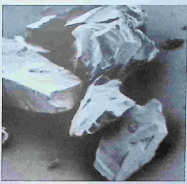
It has been extensively documented and widely stated that particle contamination is the number one cause of wear and failure of hydraulic components. The problem is generally more pronounced than in other types of machinery incorporating circulating systems that use sirnjlar types of oils. Read More